

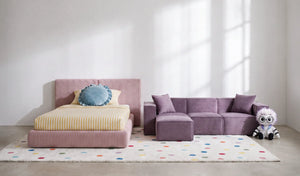

Quick answer: are boneless seats more comfortable for long-term use?
They can be, but the lack of a frame isn't what makes the difference. Long-term comfort comes down to foam quality, fabric, seat shape, and how you like to sit. A boneless seat made with high-density foam can stay supportive for years, while one made with low-grade foam may flatten.
- Look at the foam first: it provides both the structure and the comfort.
- Match the seat to your habits: a low, deep seat suits lounging more than sitting upright.
- Give it time: foam needs to fully expand before you judge how it feels.
- Test it at home: a long trial tells you more than a few minutes in a showroom.

Why comfort changes over time
A sofa can feel great on day one and very different a few years later. In a traditional sofa, comfort depends on how the cushions, springs, and frame hold up together. Cushions can compress, and some fillings need regular fluffing to keep their shape.
In a boneless seat, there's one main thing to get right. The foam does the whole job, so its quality matters even more.
Foam density is the real test

Low-grade foam tends to pancake. High-density foam is built to recover its shape after you get up, day after day.
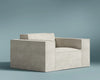
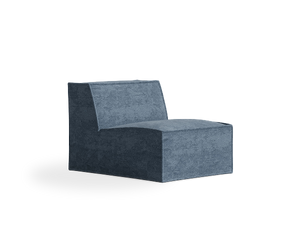
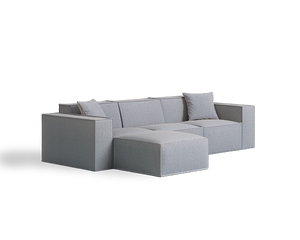
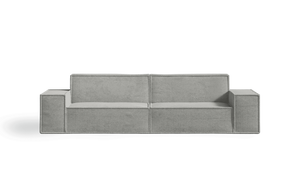
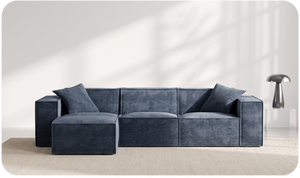
Rove Lab sofas use SmartFoam™, a proprietary high-density foam designed for soft comfort, lasting support, and shape retention. In the M1 Sofa Collection, each module is built entirely from it, so there's no separate frame or springs beneath you.
No frame means no pressure from hard edges

A boneless seat has no rails or corners to feel through a worn cushion. That's one of its real long-term advantages, particularly when you lounge across the seat or stretch out along the arm.
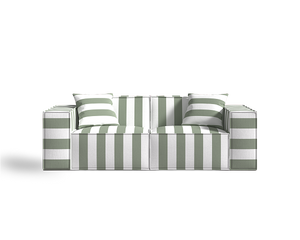
Deep seats help too. The M1 Sofa Loveseat has a seat depth of 25.1" (64 cm), which leaves room to tuck your legs up or settle in for a long film.
Seat height matters more than you'd think
This is where personal preference comes in. A low seat feels relaxed, but it also takes more effort to get up from. If you sit for long stretches or have sore knees or hips, check this measurement before anything else.
- M1 Sofa Loveseat: 15" (38 cm) seat height, for a low, lounge-style feel.
- S8+ Sleeper Sofa Bed: 17.3" (44 cm) seat height, a little higher off the floor.
If you prefer to sit tall with firm back support, a low-profile sofa may not be your ideal match, whatever it's made of. Be honest about how you really use your sofa.
Which Rove Lab sofa suits long-term comfort?
M1: everyday support

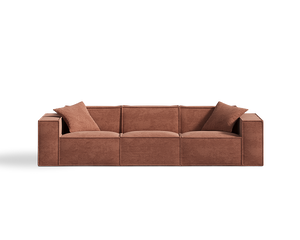
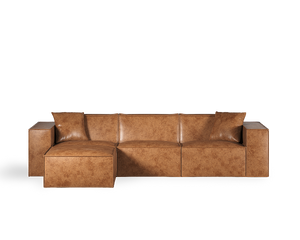
The M1 is the practical everyday choice, with SmartFoam™ that keeps things supportive without feeling stiff. Its fabrics are spill-resistant and tested to exceed 100,000 double rubs, so the surface is designed to keep up as well.
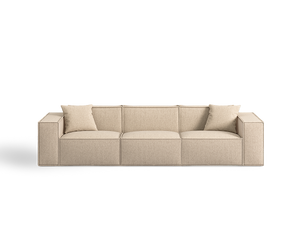
Explore the M1 Sofa Three Seater if you want more room to stretch out.
Marshbello: pillowy and relaxed

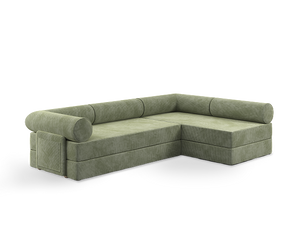
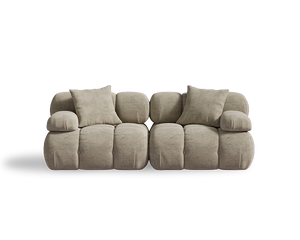
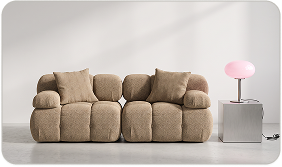
If you like an inviting, sink-in look, try the Marshbello. Its oversized, marshmallow-inspired forms and low silhouette encourage you to slow down.
Fabric shapes the feel as well: Shearling is plush and fleece-like, Performance Weave is soft and velvety, and Chatou Bouclé is richly looped. For more on this, read luxury vs. comfort on the Marshbello.
S8+: for sitting and sleeping

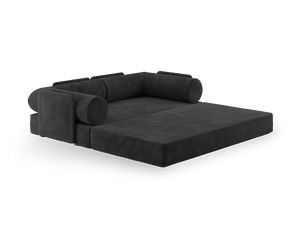
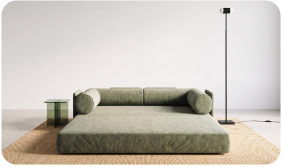
The S8+ Sleeper Sofa Bed has two foam layers. SmartFoam™ provides flexible structure and support, while CloudMemory™ adds a softer layer that gently cushions your body.
It's designed for lounging by day and overnight guests by night. Its removable, machine-washable cover also makes long-term care simpler.
Boneless seats vs framed seats over time
Every sofa is different, so use this as a general guide.
| Comfort factor | Traditional framed seat | Rove Lab boneless seat |
|---|---|---|
| Support | Springs, webbing, and cushions | High-density SmartFoam™ |
| Shape over time | Depends on the cushion filling; some need fluffing | Foam designed to retain its shape |
| Hard edges | Frame can be felt at the edges of some designs | No wood or metal frame |
| Seat height | Often higher | Low-profile: 15" on the M1 Loveseat |
| Coverage | Varies by retailer | 100-day trial and lifetime warranty |
How to test long-term comfort at home
Five minutes on a sofa doesn't tell you much. If you have a home trial, use it properly:
- Wait for full expansion. Allow up to 48 hours before you judge how the seat feels.
- Sit the way you really sit. Work on your laptop, watch a whole film, and take a nap.
- Notice how you get up. Pay attention after an hour, not just after a minute.
- Try it for weeks. A 100-day trial covers real routines, guests, and lazy Sundays.
FAQ - Frequently asked questions
Do boneless seats lose their shape?
It depends on the foam. Low-grade foam can flatten, while high-density foam like SmartFoam™ is engineered to keep its shape through everyday use.
Are boneless seats good for your back?
It varies from person to person, since preferences and needs differ. If you have ongoing back pain, ask a health professional what kind of seat they'd recommend, then use a home trial to see how a sofa feels for you.
Are boneless seats firm or soft?
SmartFoam™ balances soft comfort with support. The S8+ adds a softer CloudMemory™ layer, so it may be the better option if you prefer a more cushioned feel.
Can you sit on a boneless sofa every day?
Yes, Rove Lab sofas are made for daily use. Their high-density foam and durable fabrics are designed for everyday life.
How long does it take a boneless seat to feel right?
Allow up to 48 hours for the foam to fully expand and firm up after unboxing.
The real test is your own living room
Take 100 days to see how it feels in your everyday routine.
Shop M1 Shop Marshbello Shop S8+ Sofa Bed