![Rove Lab™ [Canada]](http://rovelab.ca/cdn/shop/files/rovelab_logo.svg?v=1781628572)






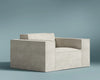
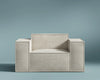
Furnishing a small, rectangular living room can feel like a puzzle. You want to maximize your space, ensure comfort, and, of course, maintain an elegant style. With the right approach, you can achieve a layout that is both functional and inviting. Let's explore how you can transform your small, rectangular living room into a haven without compromising style or utility.
Prioritize your layout
The first step in furnishing any room is to understand its natural flow. In a small, rectangular living room, the layout can make or break the space. Consider how you move through the room and where you naturally want to place your furniture. The goal is to create a harmonious flow.
- Anchor the room: Start by choosing a focal point. This could be a fireplace, a window with a view, or even a piece of art. Your seating area should revolve around this point.
- Utilize long walls: Place larger pieces, like a sofa or a bookshelf, along the longest wall to maximize space and maintain the room's balance.
- Consider traffic flow: Ensure there's enough space for people to move around without bumping into furniture. This might mean moving certain items away from the walls.
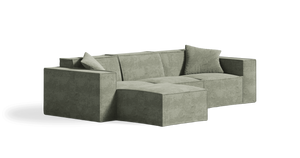
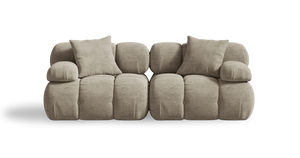
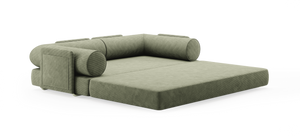
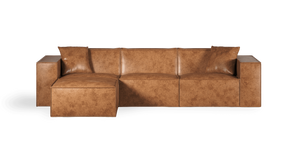
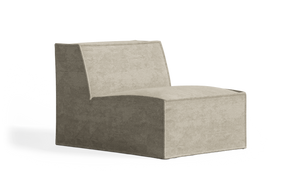
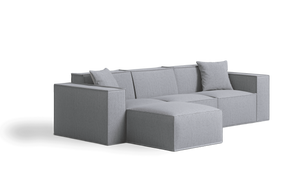
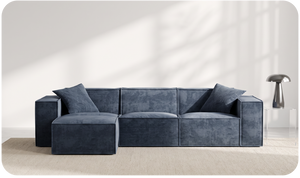
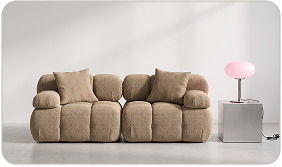
For instance, Rove Lab's M1 Sectional Sofa is perfect for a room like this. Its modular design allows you to adapt it to your space, creating a cozy nook or a spacious lounge area, depending on your needs.
Choose the right furniture
In a small living room, every piece of furniture must justify its presence. Think multi-functional and space-saving. Here's how to make smart choices:
- Opt for modular pieces: Furniture that can evolve with your needs, like modular sofas or nesting tables, are ideal. You can reconfigure them as needed.
- Choose light colors: Light-colored furniture can make a space feel larger and more open. Dark pieces can make it feel cramped.
- Choose furniture with legs: Pieces with legs rather than sitting directly on the floor create a sense of openness by allowing light to pass underneath.
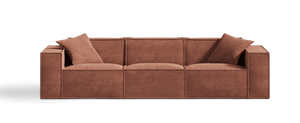
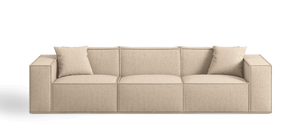
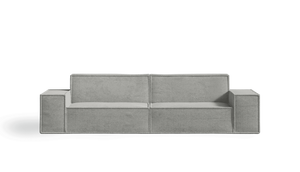
Rove Lab's M1 Three-Seater Sofa perfectly meets these criteria with its minimalist design and low profile, offering comfort without overwhelming the room.
Leverage vertical space
When floor space is limited, look up! Vertical space can be your best ally in a small, rectangular living room. Here's how to use it to your advantage:
- Install high shelves: They draw the eye upwards and offer valuable storage without taking up floor space.
- Hang curtains high: Mount your curtain rods close to the ceiling to give the impression of a taller room.
- Use wall lighting: Sconces free up surface space and add a touch of elegance.
Also, consider adding a few tall plants—they bring life and color while effectively utilizing vertical space.
Play with light and color
Lighting and color are powerful tools for transforming a small space. Here's how to use them to your advantage:
- Maximize natural light: Keep windows clear of heavy curtains. Use sheer curtains if you need privacy.
- Layer your lighting: Combine overhead lights, floor lamps, and table lamps to create a warm and inviting ambiance.
- Choose a cohesive color palette: Opt for a neutral base with pops of color to keep the space unified and spacious.
Mirrors can also be a great addition—they reflect light and give the illusion of more space.
Get creative with storage
Storage can be a challenge in a small living room, but with creativity, you can find solutions that seamlessly integrate into your decor:
- Use multi-functional furniture: Storage ottomans, coffee tables with shelves, or benches with hidden compartments are lifesavers.
- Think vertical: Wall-mounted shelves or cabinets can offer storage without encroaching on floor space.
- Keep it contained: Use baskets or boxes to organize items like remotes, toys, or magazines.
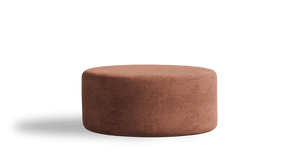
Rove Lab's M1 Sofa Ottoman is an excellent example of multi-functional furniture—offering both seating and storage in a stylish package.
Use rugs to define areas
Rugs can do wonders in a small, rectangular living room. They help define zones, add warmth, and introduce texture. Here's how to use them effectively:
- Choose the right size: A rug that's too small can make a room feel disjointed. Ensure it's large enough to anchor your furniture.
- Layer rugs: If you have a large, neutral rug, add a smaller, patterned one on top for added interest.
- Stick to a color scheme: Coordinate your rug with other elements in the room for a cohesive look.
A good rule of thumb is to ensure at least the front legs of your seating area are on the rug.
Accessorize thoughtfully
Accessories bring a room to life but can also clutter it if not chosen carefully. Here's how to keep your small living room airy:
- Less is more: Choose a few remarkable pieces rather than many small items.
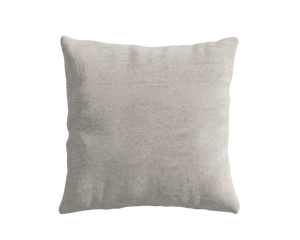
- Incorporate texture: Add pillows, throws, and a variety of materials to create interest.
- Personalize: Display a few personal items like photos or travel souvenirs.
Remember, the goal is to complement the space, not overwhelm it.
Consider flexible seating
In a small living room, flexibility is key. You might not always have space for extra seating, but options like ottomans or stools can be useful:
- Stackable stools: These can be stored away when not in use.
- Folding chairs: Keep a few on hand for guests.
- Lightweight options: Think about furniture that's easy to move.
The C8 Round Pouf is perfect for this—easy to move, stylish, and functional.
Final thoughts
Furnishing a small, rectangular living room is about maximizing space while maintaining comfort and style. By carefully choosing your furniture and accessories, and considering flow and functionality, you can create a space that feels open and inviting. If you're looking for adaptable pieces, Rove Lab's M1 Sectional Sofa offers the flexibility and style that can transform your living room into a comfortable and personalized retreat.